For more than a decade, my life has been intertwined with helpers, nannies, and the quiet, unseen backbone of many working families. If you think hiring a helper is a simple transaction — you pay, she works, life becomes easier — let me tell you: every helper is a story, and every household is a classroom.
When we had our firstborn, we didn’t have a village.
No parents nearby, no relatives dropping by to help, no one to lean on when exhaustion crept in. We engaged a confinement nanny who patiently taught us the basics — how to bathe a newborn, how to recognise different cries, how to survive nights that blurred into days. When she left, my husband and I took over everything ourselves. We stumbled, learned, and slowly found our footing. It was tough, but we managed.
Five years later, when our second child arrived, I knew things would be different. I knew my limits better. I knew the emotional toll postpartum could take. This time, without a village, I chose to build one. I engaged a confinement nanny for three months, and she became far more than just help. She took care of the baby, yes — but she also took care of me. When I was battling post-natal anxiety and depression, when my mind felt constantly away, she was steady, nurturing, reassuring. She felt like a mother figure in our home — a quiet pillar of strength when I needed one most.
Before she left, we decided to engage a helper so the transition wouldn’t be too abrupt. That was how our first helper, Gen, came into our lives. She was Filipina, expressive and outspoken. But she was experienced, and at that point in my life, experience mattered more than chemistry. She was good with the children, playful and engaging, and for that I remain grateful. However, she was constantly distracted by her phone, often unfocused at work. Still, we endured. When her two-year contract ended, she said she wanted to renew. We trusted her, paid for everything — and she never returned.
As a full-time working mum, panic set in. Childcare waits for no one. I turned to Facebook, which at that time was the go-to place for mummy recommendations. One mummy highly recommended her Indonesian helper, saying she only had to let her go because her previous maid was returning. Trusting that recommendation, we welcomed Amirah.
Amirah was bubbly and cheerful, but housework was not her strength. No matter how much she washed, everything remained oily. Plates, pots, even the kitchen itself. Toilets, I cleaned myself. We told ourselves that as long as she was good with the kids and could cook decent Indonesian food, we could endure. Until one day, my husband informed me that he saw Amirah on Facebook and that she was wearing something familiar. When I looked closer, it was my dresses, my bags. Hundreds of photos, posed like a fashion shoot. Even though my size was bigger than hers, she somehow squeezed into my clothes. Suddenly, the missing clothes pegs made sense. She had been rummaging through my wardrobe while she was supposed to be caring for my children.
I was furious. Taking personal belongings without permission crossed a line. My husband confronted her, and she promised never to do it again. And then, she told us she had met a man on Facebook, he proposed, and she wanted to return home to get married. Only 10 months with us, with no choice, we went back to the agent who processed her documents. He had been in the industry for over forty years. After reviewing two shortlisted profiles, he quietly advised us to take the petite one.
That was how Robiana entered our lives.
She was fresh from Indonesia, had no experience, and was extremely petite — barely 1.47 metres tall. I remember looking at her and wondering how she would manage housework, let alone carry my chubby toddler. I even joked to my husband that if the wind blew while she was hanging laundry, she might be blown away. I was ready to change her.
But within days, my perspective shifted completely. Robiana was one of the hardest-working people I had ever met. She swept the floor seven or eight times a day. If she was free, she looked for work. She never sat idle. She couldn’t speak English, and she couldn’t cook, but her attitude was exceptional. We trained her patiently, step by step. She absorbed everything. Eight years later, she spoke fluent English, her housework was hotel-standard, and her cooking matched it. She became family. When she eventually had to leave after eight years, we were so sad. And her maid agent retired.
Hoping to find someone similar, we tried another agency. This time, we heard that Myanmar helpers were hardworking. The first candidate arrived, and the agency told us about her bad attitude and sent her home. We waited again. The next one came — a so-called “Myanmar princess maid”. She stayed one day and decided to leave. Our home wasn’t big — just a three-bedroom, single-storey house, no pets, grown-up children. Yet it still didn’t work out.
We returned to Indonesian helpers and engaged Yuna. Robiana helped train her for a week. Housework was acceptable, but cooking never improved. No matter how much I taught her, she reverted to her own methods after a day or two. The soup was always watery. Her English didn’t improve because she made no effort. Instead of cleaning windows or furniture, she rearranged our things, even going through confidential documents without permission. Despite constant corrections and firmer boundaries, one day she simply decided to go home. After she left, I did a deep clean myself and realised how many areas had never truly been cleaned.
We waited again. Another agency. The moment I saw her work, I knew she is not the one.
Helpers are not confinement nannies. They are trained mainly for housework and basic baby care. Confinement nannies go through in-depth training. They understand postpartum recovery, emotional needs, newborn cues. Hiring a helper is often like opening a mystery box — you only discover what’s inside once you live with it.
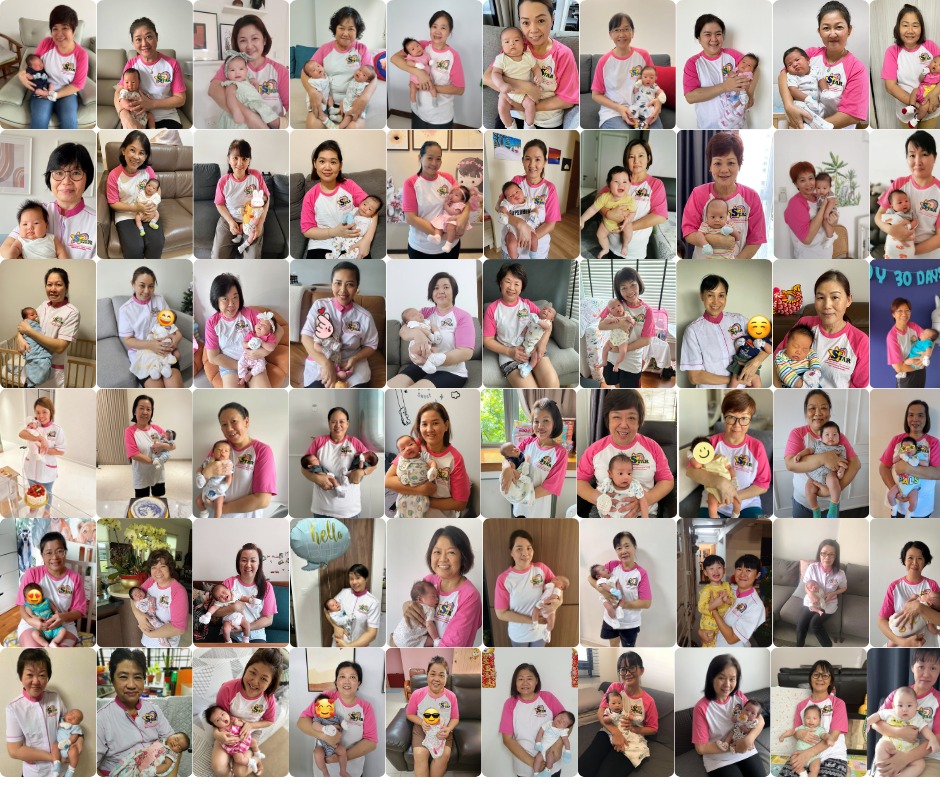
With our confinement nannies, it is different. At STAR Confinement, we know our nannies personally. We track feedback after every assignment. We train them continuously and hold them to strict standards. They are not just workers. They are like mothers, like grandmothers — women who step into a family’s most vulnerable season with experience, heart, and care.
Every helper I encountered taught me something about people, patience, and boundaries. But every confinement nanny reminded me what true support looks like.
And perhaps that is why, over the years, many of our customers keep coming back to us.
Not because we are perfect — but because we are intentional.
After everything I have personally experienced with helpers, I became very clear about one thing: parents should not have to keep “starting over”. They should not have to jump from agency to agency, reopening mystery boxes again and again, hoping that the next one will be better. Postpartum is already vulnerable enough. Families deserve stability, consistency, and peace of mind.
Because I have lived through the disappointments, the uncertainty, I enforce even stricter standards for our confinement nannies. Clear boundaries. Professional conduct. Accountability. Continuous feedback. We don’t just train and deploy — we monitor, we review, we improve. Every assignment matters, because behind every door is a tired mother, a fragile newborn, and a family finding its rhythm.
That is also why our customers don’t feel the need to “try somewhere else”. They stay, they return, they refer. Not because they are locked in — but because they trust us. They know that we already know our nannies. We know their strengths, their temperaments, their limits. We don’t send strangers into homes; we send women we stand behind.
My journey with helpers taught me what support should not look like.
My journey with confinement nannies taught me what support must look like.
And STAR Confinement was built on that difference.
Not just as an agency —
but as a village, for families who don’t have one.